
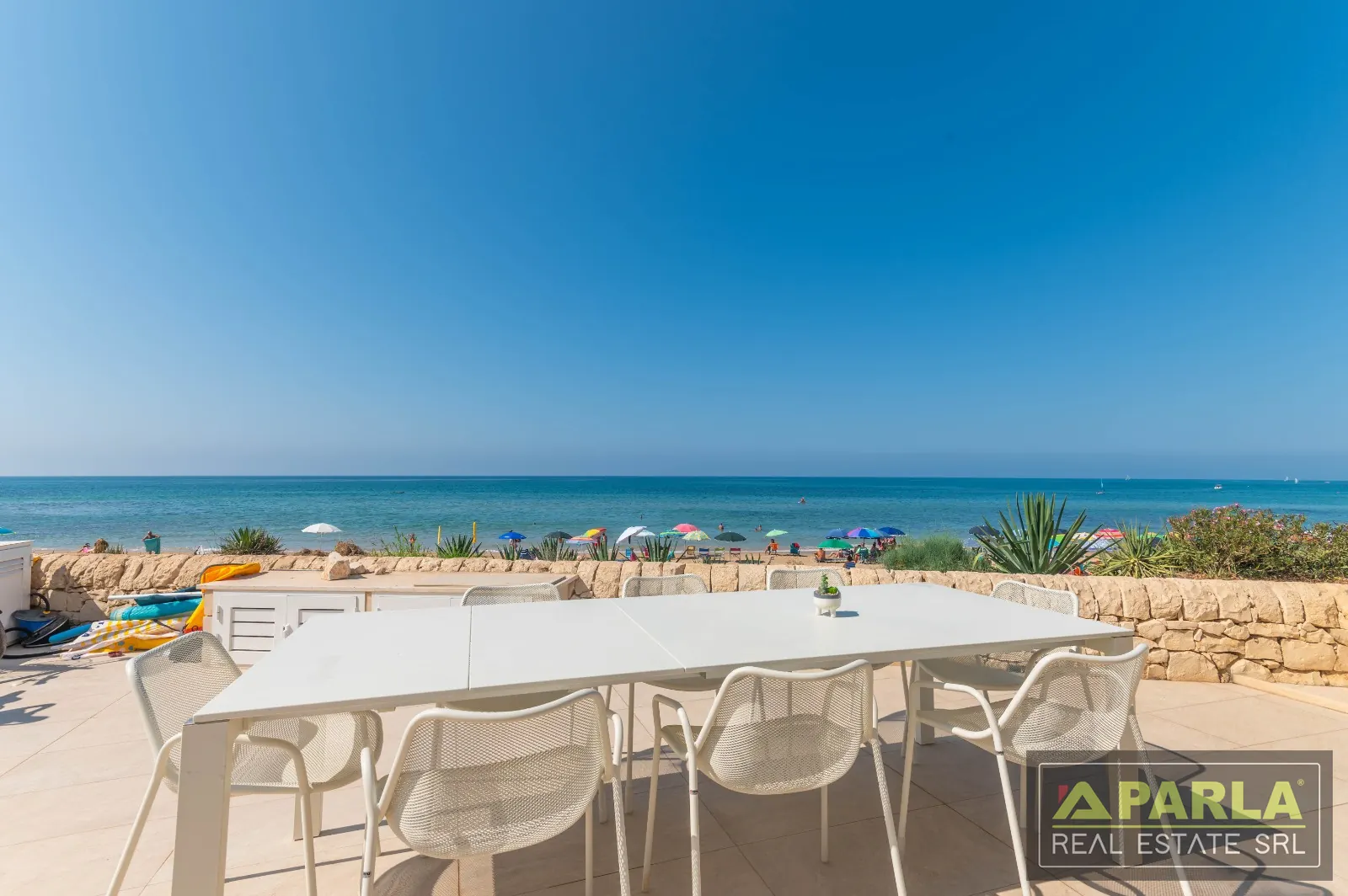
The sea at the door
Mornings on the beach in front of the house, swims from spring to autumn, long walks along the shoreline to Caucana and Punta Secca.
Home › Living in Sicily
For people who want to live in Italy or spend long periods by the sea in Sicily: the advantages, the practicalities and the rules — with official sources and the date we checked them.
Mornings on the beach in front of the house, swims from spring to autumn, long walks along the shoreline to Caucana and Punta Secca.
A large terrace for meals, reading and evenings outside; a mild coastal climate that lets you live outdoors for much of the year.
Cycling to Marina di Ragusa, tennis and padel courts nearby, nature reserves such as the Irminio for walks and birdwatching.
Fish restaurants, Michelin-starred tables within half an hour, Modica chocolate and the UNESCO Baroque towns of the Val di Noto.
Pharmacy, supermarket and bus stop within walking distance; banks, post office and year-round shops in Santa Croce Camerina and Marina di Ragusa.
Ferries from Pozzallo and Marina di Ragusa and flights from Catania (and, announced, from Comiso) make it easy to go back and forth.
These are opportunities that depend on personal preferences: life in a seaside village is different from life in a big city, not better or worse in absolute terms.
The Tumino bus stops 600 m from the house, but runs are fewer on Sundays and holidays and many destinations require changes. For shopping, health care and trips, a car is the realistic choice.
Casuzze is lively in summer; outside the season many seasonal businesses close. Year-round services are a few minutes away by car in Santa Croce Camerina and Marina di Ragusa.
Hospitals with emergency departments in Vittoria (≈23 km) and Ragusa (≈26 km); out-of-hours doctor service in Santa Croce Camerina; emergency number 118. EU pensioners can register their S1 form with the local health authority (ASP Ragusa).
Ragusa ≈30 km, Modica ≈30 km, Comiso airport ≈29 km, Catania airport ≈116 km by road from the house.
Daily costs may be lower than in some large cities, but the data need to be read carefully. Lower average household spending does not automatically mean lower prices: it also reflects incomes, household composition and habits. And the cost of everyday life in the area is separate from the cost of buying and running this specific seafront home.
| Indicator | Value | Source |
|---|---|---|
| Average monthly household spending, 2025 – Sicily | €2,305 | ISTAT |
| Lombardy (Milan’s region) | €3,066 | ISTAT |
| Lazio (Rome’s region) | €2,980 | ISTAT |
| Italy | €2,782 | ISTAT |
| Price level index 2024, household consumption (EU=100) – Italy / Malta | 98.1 / 93.1 | Eurostat |
| Food and non-alcoholic drinks – Italy / Malta | 101.7 / 112.2 | Eurostat |
| Restaurants and hotels – Italy / Malta | 106.9 / 88.7 | Eurostat |
| Petrol, self-service average, 12/10/2026 – Sicily / Italy | €2.041 / €2.036 per litre | MIMIT |
Buying a house in Italy does not give citizenship or a right to reside.
EU citizens (including those living in Malta) can stay up to three months freely. Beyond three months, registration as a resident requires working in Italy or having sufficient resources and health insurance; the European Health Insurance Card alone is not enough for registration. After five years of continuous legal residence, the right of permanent residence is acquired.
Non-EU citizens who wish to live in Italy without working can apply for an elective residence visa: the consulates ask for stable non-employment income (indicatively at least €31,000 a year per applicant) and accommodation already available in Italy. Requirements are set by each consulate.
Tax residence: since 2024 a person is tax-resident in Italy if, for most of the year (183 days), they have their residence, their domicile (main personal and family ties), their physical presence or their registration in the population register in Italy — subject to tax treaties.
Moving to Sicily can offer tax opportunities for people who meet the requirements set by Italian law. Nothing is automatic: neither buying a house nor being an EU citizen gives a tax benefit in itself.
For individuals who receive pensions paid from abroad and transfer their tax residence to an eligible municipality in southern Italy. All foreign-source income is taxed at 7% for up to ten years; Italian-source income remains subject to ordinary tax, and pensions paid by Italian bodies (e.g. INPS) are excluded.
Requirements include not having been tax-resident in Italy in the previous five years and coming from a country with an administrative cooperation agreement with Italy (such as an EU country, including Malta). The option is exercised in the tax return for the year of the move.
Santa Croce Camerina, the municipality of Casuzze, had 11,405 residents at 31/12/2024 (ISTAT data), below the population threshold — 20,000, raised to 30,000 by Law no. 34 of 11 March 2026. The relevant figure is the ISTAT population at 1 January of the year before the move; the year from which the new threshold applies should be checked with an accountant.
The benefit depends on the person’s situation, not on the property.
Employment and self-employment income produced in Italy is 50% exempt (60% with a minor child), up to €600,000 a year, for five years.
Main conditions: tax residence abroad for at least three years before (longer if working for the same group), staying in Italy for at least four years, highly qualified or specialised profile, work carried out mainly in Italy.
Buying from a private seller as a main home: 2% registration tax (instead of 9%) plus fixed taxes; from a VAT-registered builder, 4% VAT. The property must not be in cadastral categories A/1, A/8 or A/9.
The buyer must have, or transfer within 18 months, their registered residence in the municipality (or work there), and meet the other requirements on property ownership. Foreigners can benefit if they meet the requirements; for non-EU citizens a residence permit is needed to register.
Purchase benefits are different from the IMU property-tax exemption for the main residence, which requires actually living there with registered residence.
Always check how these rules apply to you with an accountant (commercialista) and the notary before you decide. Sources checked on 13/10/2026.
Parla Real Estate
Speak directly with Parla Real Estate. We can arrange an in-person viewing, a live video tour, or send the floor plan and documents in your language.
€750,000 Negotiable asking price
This assistant runs in your browser and does not store or send what you type. Ask the agency on WhatsApp